
Design Guide
Handleless Kitchen Design: Why SieMatic SLX Is the Gold Standard
The handleless kitchen has become one of the defining aesthetics of contemporary design — but not all handleless systems are created equal.
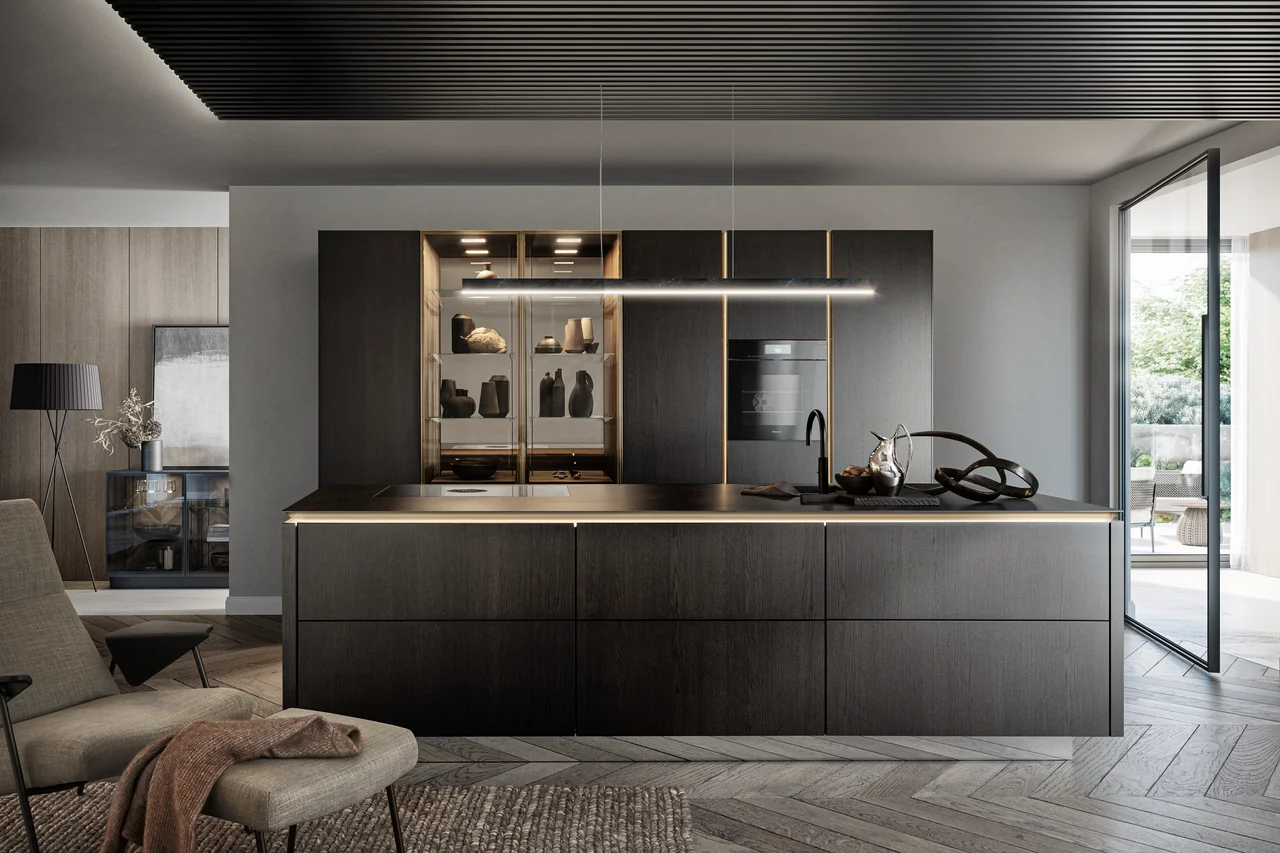
A handleless kitchen removes the visual clutter of knobs and pulls, letting cabinetry read as clean, architectural planes. The result is calm, modern, and timeless. But “handleless” is an umbrella term covering several very different engineering approaches — and the difference between them is the difference between a kitchen that feels merely trendy and one that feels truly bespoke. As an authorized SieMatic dealer in Southern California, we install handleless kitchens constantly; here is what we have learned.
What “Handleless” Really Means
There are three common ways to achieve a handleless look, and they are not equal:
- True handleless (recessed channel): A continuous reveal behind the door edge gives a place to grip while keeping fronts perfectly flat. The most refined and durable approach.
- J-pull / lip-pull: The door itself is shaped with a lip to grip. Economical, but the profile is visible and can feel less clean.
- Push-to-open: A mechanical latch opens the door with a press. Elegant, but can be temperamental on heavy or frequently used doors.
The SieMatic SLX System
SieMatic SLX is the brand’s flagship handleless program, and it represents true handleless design executed at the highest level. SLX uses a slim, precision aluminum channel integrated into the cabinetry architecture, with an exceptionally narrow, consistent reveal. The grip channel can be finished to match or contrast the fronts, and the tolerances are tight enough that doors and drawers align in perfectly continuous lines across the entire run.
Why SLX Is the Gold Standard
Three things separate SLX from ordinary handleless cabinetry:
- German precision: Engineered tolerances keep gaps uniform and reveals razor-straight, even on long elevations.
- Material depth: SLX is available in lacquers, real wood veneers, glass, and metal finishes that coordinate across the whole home.
- Integrated design language: The channel, interiors, and hardware are designed as one system — not adapted parts — so everything works together for decades.
Is Handleless Right for Your Kitchen?
Handleless design rewards clean, contemporary and transitional interiors and is especially striking on islands and full-height cabinetry. If your home leans traditional, a handleless system can still work beautifully when paired with warm wood veneers and natural stone. The key consideration is ergonomics: we plan channel placement around how each cabinet is actually used so daily function feels effortless.
How We Design Handleless Kitchens
Every handleless project begins with a full 3D layout where we resolve sightlines, reveal alignment, and appliance integration before fabrication. We coordinate the SLX channel finish with countertops, flooring, and lighting so the room reads as one composition. You can see finished examples in our portfolio or learn about our design process.
Frequently Asked Questions
Are handleless kitchens harder to clean?
No — in fact, removing protruding hardware means fewer places for grime to collect. A true recessed-channel system like SLX wipes clean easily; the channel itself is smooth aluminum.
Is handleless design more expensive?
A true handleless system such as SieMatic SLX typically costs more than standard cabinetry with applied hardware, because of the precision engineering involved. J-pull options are more economical but visually less refined.
Will a handleless kitchen still look current in ten years?
Yes. Clean, architectural cabinetry has remained desirable for decades. Choosing quality materials and a true handleless system — rather than a trend-driven shortcut — is what keeps it timeless.
Planning Your Kitchen?
Book a consultation at our La Jolla or Laguna Beach showroom and we’ll help you choose the right cabinetry system for your space.